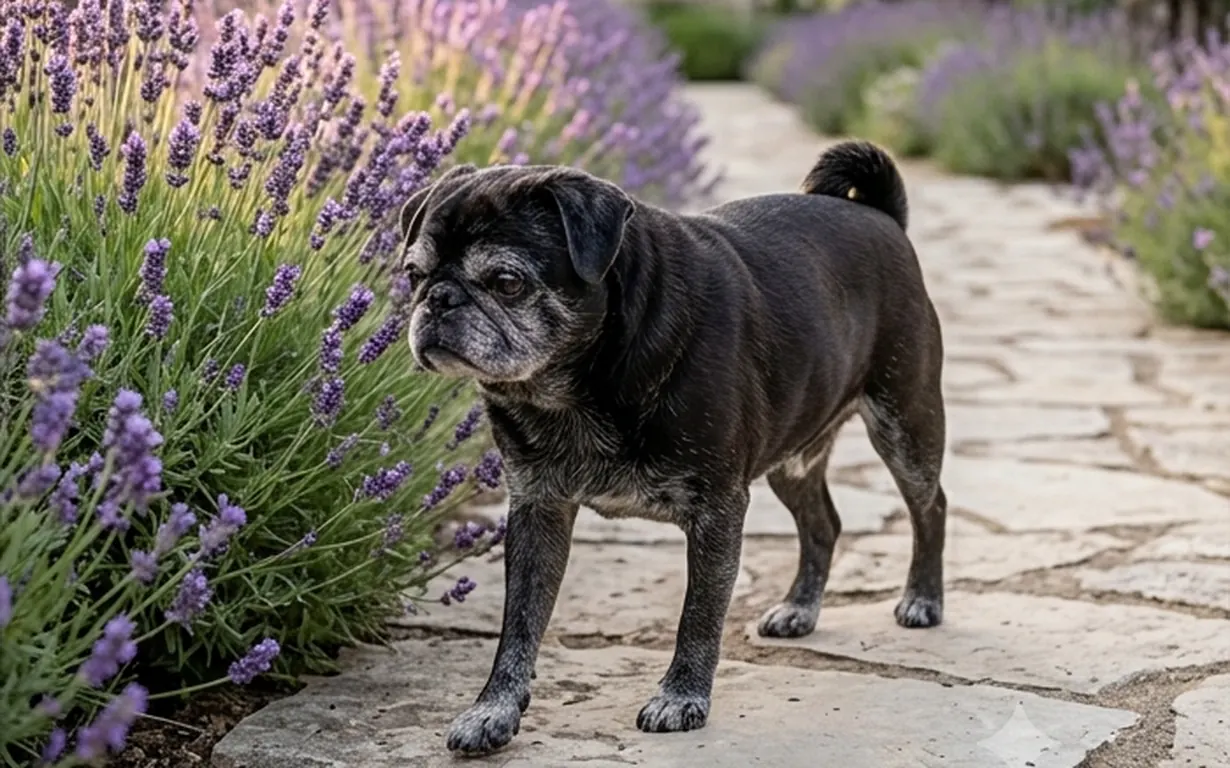
Cavalier King Charles Spaniel Life Expectancy and the Heart

Cavalier King Charles Spaniels live a median of 11.8 years: half live longer, half don't get that far. That comes from a 2024 study of UK dog lifespans, which included 13,782 Cavaliers. Unlike some breeds, where published figures are years apart, the two big UK studies broadly agree on Cavaliers. Both put them a little below the average dog. Where the breed really stands out in vet records is the heart.
Key takeaways
- A median of 11.8 years across 13,782 UK Cavaliers (McMillan et al. 2024), against 12.5 for dogs overall.
- A life table built from 867 UK Cavaliers estimated 10.45 years (Teng et al. 2022), against 11.23 for all dogs.
- Heart murmurs were the most common problem in UK vet records, found in 30.9% of Cavaliers (Summers et al. 2015).
- Cavaliers had 47.37 times the odds of a mitral valve disease diagnosis compared with crossbreeds (Mattin et al. 2015).
- On the 11.8-year figure, a Cavalier turns senior at about 9, a little before the 9.6 we use for small dogs in general.
How long do Cavaliers live?
| Source | What it measured | Cavalier |
|---|---|---|
| McMillan et al. 2024584,734 UK dogs | Median lifespan | 11.8 years95% CI 11.7–11.9 |
| Teng et al. 2022867 UK Cavaliers that died | Life expectancy at birth | 10.45 years95% CI 10.26–10.62 |
| American Kennel Club | General breed range | 12–15 years |
The gap between the two studies is about a year and a half, and that's expected. A median is the age half of dogs reach, so early deaths barely move it. Life expectancy works more like an average, so every early death pulls it down. For breeds like the Chihuahua the same two studies are almost four years apart, so the Cavalier picture is unusually consistent.
Both studies also agree on direction. In McMillan's data, Cavaliers had a slightly higher risk of dying at any given age than crossbreeds (a hazard ratio of 1.07). In Teng's life tables, they came in below the figure for dogs overall. We use 11.8 because its sample is larger and it counts living dogs as well as those that died. The 12 to 15 years from the AKC sits above both studies.
Cavaliers next to other small breeds
Small dogs often outlive big ones, but the Cavalier is an exception to that rule of thumb. It shares its 11.8-year median with the Chihuahua and trails other popular small breeds by one to one and a half years.
How common is heart disease in Cavaliers?
Very common, by the standards of any breed. A UK study of Cavaliers under vet care reviewed the records of 1,749 dogs seen at practices in England. The most common problems were:
- Heart murmur: 30.9%
- Diarrhea: 11.0%
- Dental disease: 9.5%
- Ear infection (otitis externa): 9.2%
Heart problems of any kind affected 31.7% of the dogs, with mitral valve disease recorded in 5.0%. That was a fairly young group, too: half were 5.25 or younger at their last recorded visit. Most of the other common problems were much the same as in dogs generally. The heart was the clear exception.
A second UK study of 111,967 dogs looked at degenerative mitral valve disease, where a heart valve slowly stops closing properly. Cavaliers made up 32.4% of all the dogs diagnosed with it, and had 47.37 times the odds of a diagnosis compared with crossbreeds. The authors note that part of that gap may come from vets knowing the breed's risk and recording the diagnosis more readily. Even for heart murmurs alone, Cavaliers had 18.72 times the odds.
A murmur is a sound your vet hears through the stethoscope, not a diagnosis on its own. Your vet can tell you what is likely causing it and how often to recheck.
Is heart disease what shortens a Cavalier's life?
Probably part of it, but we couldn't find a large study from everyday vet clinics that ranks causes of death for Cavaliers, so we can't give you percentages. What we can say is that heart disease is the breed's most common recorded problem by a wide margin. In a UK study of 893 dogs with mitral valve disease, 35.9% of them Cavaliers, dogs that tired easily on exercise or had trouble breathing had a higher risk of death.
What you can do
- Have the heart checked at every visit. A murmur found early gives your vet a baseline to compare against.
- Notice changes in stamina and breathing. Tiring sooner on walks, breathing hard at rest, or coughing are worth a call to your vet. In that UK study, vets asked owners to count their dog's breaths per minute while it slept deeply at home. Ask your vet whether that would help for your dog.
- Keep an eye on weight. The AKC lists 13 to 18 lbs for the breed. In the UK records, the median adult Cavalier weighed 10.5 kg (about 23 lbs). Your vet can tell you what's right for your dog.
When is a Cavalier a senior?
At about 9, the last 25% of an 11.8-year median lifespan. That's a little before the 9.6 we use for small dogs in general, as explained in how old is my dog in human years. On our scale, a 9-year-old Cavalier is about 66 in human years and a 14-year-old about 82. Our Cavalier age calculator converts any age.
How old is your Cavalier in human years? Enter their age for a breed-specific answer and life stage.
Frequently asked questions
How long do Cavalier King Charles Spaniels live?
A median of 11.8 years, according to a 2024 study of 584,734 UK dogs that included 13,782 Cavaliers. A UK life table built from 867 Cavaliers estimated 10.45 years of life expectancy at birth.
Do Cavaliers live shorter lives than other small dogs?
A little. Their 11.8-year median is below the 12.5 years for all dogs and well below small breeds like the Yorkshire Terrier (13.3) and Shih Tzu (12.8). It matches the Chihuahua.
Is a heart murmur in a Cavalier serious?
It's worth following up, but a murmur is a sound, not a diagnosis on its own. Heart murmurs were recorded in 30.9% of Cavaliers in a UK vet records study. Your vet can tell you what is likely causing it and how often to recheck.
Is 12 old for a Cavalier King Charles Spaniel?
Yes. Twelve is just past the 11.8-year median, so about half of Cavaliers don't reach it. It is still inside the 12 to 15 years listed by the American Kennel Club.
When is a Cavalier considered a senior?
From about 9 years. That is the last 25% of an 11.8-year median lifespan, which is how AAHA defines the senior stage.
Sources
- McMillan KM, Bielby J, Williams CL, Upjohn MM, Casey RA, Christley RM (2024). Longevity of companion dog breeds: those at risk from early death. Scientific Reports 14: 531. doi:10.1038/s41598-023-50458-w
- Teng KT, Brodbelt DC, Pegram C, Church DB, O'Neill DG (2022). Life tables of annual life expectancy and mortality for companion dogs in the United Kingdom. Scientific Reports 12: 6415. doi:10.1038/s41598-022-10341-6
- Summers JF, O'Neill DG, Church DB, Thomson PC, McGreevy PD, Brodbelt DC (2015). Prevalence of disorders recorded in Cavalier King Charles Spaniels attending primary-care veterinary practices in England. Canine Genetics and Epidemiology 2: 4. doi:10.1186/s40575-015-0016-7
- Mattin MJ, Boswood A, Church DB, López-Alvarez J, McGreevy PD, O'Neill DG, Thomson PC, Brodbelt DC (2015). Prevalence of and risk factors for degenerative mitral valve disease in dogs attending primary-care veterinary practices in England. Journal of Veterinary Internal Medicine 29(3): 847–854. doi:10.1111/jvim.12591
- Mattin MJ, Boswood A, Church DB, Brodbelt DC (2019). Prognostic factors in dogs with presumed degenerative mitral valve disease attending primary-care veterinary practices in the United Kingdom. Journal of Veterinary Internal Medicine 33(2): 432–444. doi:10.1111/jvim.15251
- Creevy KE, et al. (2019). 2019 AAHA Canine Life Stage Guidelines. Journal of the American Animal Hospital Association 55(6): 267–290. doi:10.5326/JAAHA-MS-6999
- American Kennel Club. Cavalier King Charles Spaniel breed profile.
This article is for informational purposes only and is not a substitute for professional veterinary advice. Always consult a licensed veterinarian for questions about your dog's health.