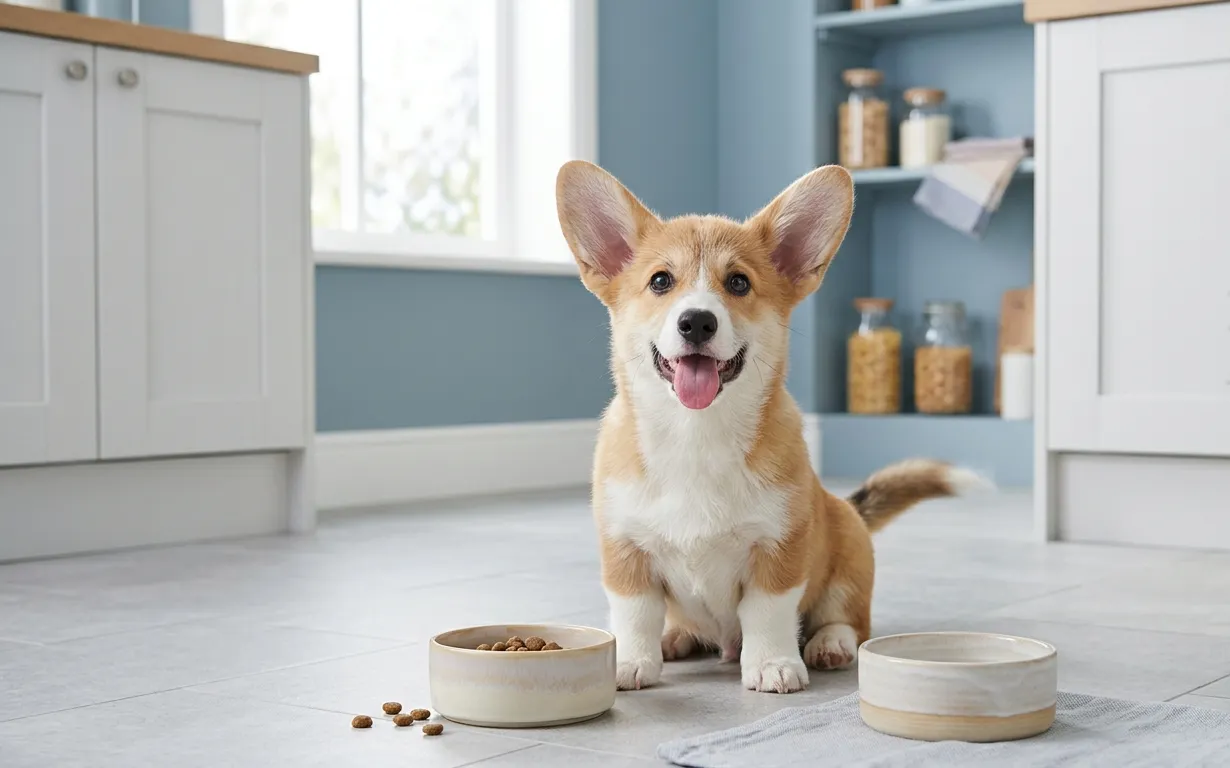
Most dogs are physically grown by about 12 months, but "adult" means three different things: when they stop growing, when they can reproduce, and when they settle down. Size changes all three. A Chihuahua is done growing well before a Great Dane, and both keep maturing in behavior for a few more years.
Here's what each milestone looks like by size, and what it means for food, exercise and training.
The short answer, by size
| Size (adult weight) | Puppy until | Young adult until |
|---|---|---|
| Small (under 20 lbs) | ~9 months | ~4 years |
| Medium (20–50 lbs) | ~12 months | ~4 years |
| Large (50–90 lbs) | ~15 months | ~3.5 years |
| Giant (90+ lbs) | ~18 months | ~3 years |
Physical growth is more even: puppies of every size reach about 90% of their adult weight around 10 months.
Life stage timing follows the 2019 AAHA Canine Life Stage Guidelines as applied in our dog age calculator. Weight milestones come from our analysis of the WALTHAM / Banfield puppy growth dataset, covering more than 100,000 healthy purebred puppies.
Three kinds of "grown up"
1. Physical growth: mostly done by 10–12 months
This is the one most owners mean. In the growth data behind our puppy weight calculator, puppies of every size reached about 90% of their adult weight around 10 months and about 95% around 12 months.
The surprise is that small and giant puppies finish on a similar calendar. The difference is how far they travel. A small puppy roughly triples its 8-week weight; a giant puppy multiplies it about seven times in the same period. Large and giant breeds also keep filling out with muscle into their second year, so they can look "lanky" for a while after the scale slows down. For the full timeline by size, see when do puppies stop growing.
2. Sexual maturity: usually 6–12 months
Most dogs can reproduce well before they're fully grown, often between 6 months and a year, and later in large breeds. This is why "my puppy hit puberty" doesn't mean "my puppy is an adult." Talk to your vet about spay/neuter timing, especially for large breeds, where the best age is still debated.
3. Social maturity: 2–4 years
AAHA's young adult stage runs from the end of rapid growth until physical and social maturation are complete. That's why a two-year-old Labrador can be adult-sized and still act like a teenager. Expect some testing of boundaries, bursts of energy and selective hearing during this stretch. Consistent training pays off most here.
When should you switch to adult dog food?
Puppy food is built for growth: more calories, protein and carefully balanced calcium. Switch once your puppy's growth has mostly slowed. For most dogs, that's somewhere around their first birthday. Until then, see how many times a day to feed a puppy, and use our puppy feeding calculator for daily amounts.
- Small breeds often switch first, since they finish their puppy stage earliest.
- Large and giant breeds usually stay on a large-breed puppy formula longer, because controlled growth matters more for their joints.
- Watch body condition, not just the calendar. If your puppy is getting round on puppy food, it may be time to switch sooner.
Your vet can confirm the right moment based on your dog's breed and body condition. Check that the new food is labeled for adult maintenance.
Signs your puppy is turning into an adult
- Weight gain slows to a crawl. Weigh monthly; when it barely moves, growth is nearly done.
- Adult teeth are all in. This happens by about 7 months, so it's an early sign, not the finish line.
- Energy evens out. Fewer frantic bursts, longer naps, more focus on walks.
- Appetite drops a little. Growing takes a lot of fuel; maintenance takes less.
Estimate your puppy's adult size
Want to know how big your puppy will be when growth slows down? Enter their age and current weight in our puppy weight calculator. It shows an estimated adult weight, a likely range, and how far along your puppy is. Once your dog is grown, the dog age calculator converts their age to human years. For younger puppies, see puppy age in human years.
Sources
- Salt, C., Morris, P. J., German, A. J., et al. (2017). Growth standard charts for monitoring bodyweight in dogs of different sizes. PLOS ONE, 12(9), e0182064. doi.org/10.1371/journal.pone.0182064. Dataset: University of Liverpool (CC BY 4.0).
- Creevy, K. E., Grady, J., Little, S. E., et al. (2019). 2019 AAHA Canine Life Stage Guidelines. Journal of the American Animal Hospital Association, 55(6), 267–290. doi.org/10.5326/JAAHA-MS-6999
This article is for informational purposes only and is not a substitute for professional veterinary advice. Always consult a licensed veterinarian for questions about your dog's health.